

CG Policy · 2025
In this section7 topics
Corporate Governance Policy
Has a Corporate Governance Policy
Yes
Policy Description
The Board of Directors has established a Corporate Governance Policy, which sets out policies and guidelines consistent with the principles of corporate governance as prescribed by the Stock Exchange of Thailand (SET) and the Securities and Exchange Commission (SEC).
The Corporate Governance Policy has been prepared with the objective of ensuring that the Company conducts its business with fairness and responsibility toward all stakeholders, treating them equally and transparently, with the aim of driving the Company’s sustainable development. The Board of Directors, executives, and all employees are required to comply with the Corporate Governance Policy.
The Corporate Governance Policy consists of:
• Shareholders’ Rights
• Equitable Treatment of Shareholders
• Roles of Stakeholders
• Disclosure and Transparency
• Responsibilities of the Board of Directors
Policy Document Link
https://www.sprc.co.th/en/corporate/SitePages/CorporateGovernancePolicy.aspx
Policy & Practices — Board of Directors
Has Policy & Guidelines for the Board
Yes
Board Guidelines
| Guideline | Other — Please Specify | Detail |
|---|---|---|
| Nomination of Directors | In selecting members of the Board of Directors, consideration shall be given to the composition of the Board, which must consist of directors who possess the qualifications, knowledge, competence, and experience across various relevant fields that will support the Company’s development and the determination of its business direction, policies, and strategies. The Board shall also monitor the Company’s performance to ensure that operations comply efficiently with the established plans, strategies, and budgets, as well as comply with applicable rules and regulations issued by regulatory authorities, relevant government agencies, and the resolutions of the shareholders’ meeting. All actions must be conducted with integrity, transparency, prudence, and due care to protect the Company’s interests and to ensure the utmost benefit for shareholders. The Company has also established appropriate internal control and internal audit systems in accordance with good corporate governance principles. The Company’s Articles of Association prescribe the rules regarding the appointment, removal, or vacation of office of directors. The key points are summarized as follows:
| |
| Determination of Director Remuneration | The Company’s Articles of Association require that the Annual General Meeting of Shareholders consider and approve directors’ remuneration. Directors are entitled to receive remuneration from the Company in the form of monthly remuneration, meeting allowances, gratuities, bonuses, or other benefits as stipulated in the Articles of Association or as approved by the shareholders’ meeting. Such remuneration may be determined as a fixed amount or based on criteria established from time to time. The Nomination, Remuneration, and Corporate Governance Committee, at its Meeting No. 1/2025, considered the directors’ remuneration for the year 2025. In its deliberation, the Committee reviewed the directors’ remuneration survey conducted by the Thai Institute of Directors Association and carefully considered the appropriateness of remuneration, taking into account the Company’s performance and operating results. The Committee also benchmarked the proposed remuneration against that of directors of other oil refinery companies and listed companies in the same industry group. In order to comply with the principles of good corporate governance in accordance with ASEAN guidelines and to maintain consistency with the Company’s past remuneration practices, the Nomination, Remuneration, and Corporate Governance Committee was of the opinion that directors should not receive remuneration in the form of bonuses. Accordingly, the Committee proposed that directors’ remuneration for the year 2025 consist solely of monthly remuneration and meeting allowances on a per meeting basis, with no bonuses or other forms of remuneration. | |
| Independence of the Board of Directors from the Management | The Company has clearly segregated the roles and responsibilities of the Board of Directors from those of management. The Board has delegated authority to the Chief Executive Officer to manage, control, and oversee the Company’s operations as assigned by the Board. The scope of authority and responsibilities between the Board of Directors and the Chief Executive Officer has been clearly defined and segregated. The Board has authorized the Chief Executive Officer to manage, control, and oversee the conduct of the Company’s business in the ordinary course of business, including making decisions or taking actions within the delegated authority, as well as entering into transactions or commitments that are beneficial to the Company. Mr. Brandt Thomas Fish was appointed by the Board of Directors as a Director and Chairman of the Board, with effect from 14 May 2019. The Board Charter sets out the roles and responsibilities of the Chairman of the Board as follows:
Vice Chairman of the Board Ms. Kamolwan Vipulakorn, an Independent Director, was appointed by the Board of Directors at Meeting No. 1A/2025 to serve as Vice Chairman of the Board, with effect from 10 April 2025, replacing Mr. Pliu Mangornkanok, whose term as a Director had expired. As the Chairman of the Board is not an Independent Director, the Board of Directors considered it appropriate to appoint the Vice Chairman of the Board from among the Independent Directors. The Vice Chairman of the Board is responsible for supporting the Chairman of the Board in the performance of his duties and acting on behalf of the Chairman at meetings of the Board of Directors or shareholders’ meetings in cases where the Chairman does not attend the meeting, is absent from the meeting, or attends the meeting but is unable to perform the duties of Chairman. Chief Executive Officer Mr. Robert Joseph Dobrik was appointed by the Board of Directors at Meeting No. 2A/2021 to serve as a Director and Chief Executive Officer of the Company, with effect from 1 October 2021. Mr. Robert Joseph Dobrik subsequently resigned from his positions as Director and Chief Executive Officer of the Company, with effect from 1 July 2025. Thereafter, Mr. Herbert Matthew Penn II was appointed by the Board of Directors at Meeting No. 2/2025 to serve as Chief Executive Officer of the Company, with effect from 1 July 2025. The Chief Executive Officer is the highest ranking executive of the management team. A person appointed as Chief Executive Officer must not concurrently hold the position of chief executive officer in any other company. The qualifications of the Chief Executive Officer are subject to consideration by the Human Resources Committee and approval by the Board of Directors. The Board of Directors has the authority to appoint and remove the Chief Executive Officer of the Company. The Chief Executive Officer is responsible for managing, controlling, and overseeing the Company’s operations as delegated by the Board of Directors. The scope of authority and responsibilities between the Board of Directors and the Chief Executive Officer has been clearly defined and segregated. The Board of Directors has delegated authority to the Chief Executive Officer to manage, control, and oversee the conduct of the Company’s business in the ordinary course of business. The Chief Executive Officer is authorized to make decisions or take any actions within the scope of delegated authority, including entering into transactions or commitments that are beneficial to the Company. In 2025, the Board of Directors reviewed the scope of authority of the Chief Executive Officer to ensure alignment with the Company’s business strategy. At the Board of Directors’ Meeting No. 2A/2025, the Board considered and approved revisions to the authority of the Chief Executive Officer, granting authority to manage, control, and conduct the Company’s business in the ordinary course of business, including making decisions or taking actions within the delegated authority, as well as entering into transactions or commitments that are beneficial to the Company. The scope of authority of the Chief Executive Officer to enter into transactions on behalf of the Company was defined, with key details summarized as follows:
Any transaction with a value exceeding the limits specified above must be submitted to the Board of Directors for approval. In the case of related party transactions, such transactions must also be submitted to the Audit Committee for consideration and opinion prior to submission to the Board of Directors for approval. | |
| Director Development | The Board of Directors encourages all directors to participate in training programs and seminars relevant to their roles and duties as directors, as organized by the Thai Institute of Directors Association (IOD), in order to enhance their knowledge, competencies, and effectiveness in the performance of their duties and to comply with good corporate governance best practices. The Nomination, Remuneration, and Corporate Governance Committee (the “Nomination Committee”) has been assigned the responsibility to consider and monitor the directors’ participation in such training and seminar programs. | |
| Board Performance Evaluation | At the end of each year, all directors are required to conduct a self assessment to review the performance of their duties. The results of such assessments are discussed in order to identify areas for further development and improvement, with the objective of enhancing the effectiveness of the Board of Directors in alignment with the Company’s strategy and in achieving the Company’s objectives. The Board of Directors’ self assessment comprises the following:
In addition, the Board of Directors conducts a performance evaluation of the Chief Executive Officer. | |
| Corporate Governance of Subsidiaries and Associated Companies | In overseeing corporate governance, the Board of Directors has established guidelines for the governance of the Company’s subsidiaries and associates by appointing representatives of the Company to serve as directors of such subsidiaries and associates in proportion to the Company’s shareholding. The Company’s representatives appointed to serve as directors of subsidiaries and associates are senior executives nominated for such positions, and such nominations must be approved by the Board of Directors. The Company’s representatives serving as directors of subsidiaries and associates are responsible for acting in the best interests of the subsidiaries and associates. Their duties also include overseeing and ensuring that the subsidiaries and associates comply with applicable policies and relevant laws, such as those relating to connected transactions, the acquisition or disposal of assets, material transactions, data retention, accounting records, and information disclosure. However, decisions relating to significant business operations must, as the case may be, subject to approval by the Board of Directors. In addition, management is required to report progress and material operational matters to the Board of Directors on a regular basis. | |
| Other guidelines regarding the board of directors | Appointment of the Audit Committee | Audit Committee members must be Independent Directors of the Company who possess all qualifications as prescribed under the laws governing securities and the securities market, notifications of the Capital Market Supervisory Board, as well as the rules, regulations, and/or requirements of the Stock Exchange of Thailand. In accordance with the criteria prescribed by the Capital Market Supervisory Board and the Stock Exchange of Thailand, the Company’s Audit Committee must comprise at least three Audit Committee members who possess sufficient knowledge and experience to perform their duties as Audit Committee members. At least one Audit Committee member must have sufficient knowledge and experience to review the reliability of the Company’s financial statements. The tenure of each Audit Committee member is subject to the condition that such member continues to meet the qualifications of an Audit Committee member and remains a Director of the Company, in accordance with the applicable criteria, which may be summarized as follows:
|
Policy & Practices — Shareholders and Stakeholders
Has Policy & Guidelines for Shareholders and Stakeholders
Yes
Shareholder & Stakeholder Guidelines
| Guideline | Other — Please Specify | Detail | Document Link | Page Number in Report | ||||||||||||||||
|---|---|---|---|---|---|---|---|---|---|---|---|---|---|---|---|---|---|---|---|---|
| Shareholder | Shareholders’ Rights The Company recognizes the rights of all shareholders. All shareholders have the right to freely buy, sell, or transfer shares, as well as the right to attend and exercise voting rights at shareholders’ meetings. In organizing each shareholders’ meeting, the Company ensures that the rights of all shareholders are treated equally. In 2025, the Company held one shareholders’ meeting, namely the 2025 Annual General Meeting of Shareholders, which was conducted via electronic media. The meeting was organized in compliance with the Company’s Articles of Association, relevant regulations governing shareholders’ meetings, and good corporate governance practices. At the 2025 Annual General Meeting of Shareholders held on 10 April 2025, shareholders considered and approved the financial statements for the year ended 31 December 2024, approved the dividend payment for the operating results of 2024, approved the directors’ remuneration for 2025, appointed the auditors and approved the audit fees for 2025, and considered the election of directors to replace those retiring by rotation. For each shareholders’ meeting, in order to enable shareholders to effectively consider each agenda item and make informed voting decisions, the Company prepared a Notice of Meeting containing relevant information, details, supporting rationale, and the opinions of the Board of Directors for each agenda item. The Notice of Meeting also included proxy forms, proxy documentation and procedures, as well as instructions for registration and electronic voting. The Notice of Meeting and all related details were prepared in both Thai and English. The Company published the Notice of Meeting and all supporting documents on the Company’s website on 7 March 2025, and sent the Notice of Meeting and all supporting documents to all shareholders by registered mail on 19 March 2025, in order to provide advance notice and allow shareholders sufficient time to review the information and prepare prior to attending the meeting. The Company informed shareholders and provided a channel for shareholders to submit questions related to the meeting agenda in advance of the meeting by sending questions to the Company Secretary at CompanySecretary@sprc.co.th Details Contained in the Notice of Meeting
Meeting Agenda Items The meeting agenda included matters for shareholders’ consideration, together with supporting details, rationale, and the opinions of the Board of Directors for each agenda item, including:
During the shareholders’ meeting, the Company’s legal advisors from Baker & McKenzie Ltd. attended the meeting, and the internal auditor was invited to serve as a witness to the vote counting and to verify registration and voting procedures. In addition, the Chairperson assigned the Company Secretary to explain the electronic voting and vote counting procedures to shareholders prior to the consideration of each agenda item. Shareholders were allowed to vote for the election of directors on an individual basis, and after voting, the election results were announced with a breakdown of votes for each candidate. The Chairperson provided shareholders with the opportunity to ask questions and express opinions and suggestions. Members of the Board of Directors, the Chief Executive Officer, and the Company’s executives attended the meeting to respond to questions and receive shareholders’ comments and suggestions. After the meeting, the Company prepared comprehensive meeting minutes, including summaries of questions, explanations, clarifications, and opinions raised during the meeting. After the shareholders’ meeting concluded, the Company recorded the resolutions of the meeting, including the number of votes cast in favor, against, and abstained for each agenda item, and published the resolutions on the Company’s website on the same day. The Company published the minutes of the shareholders’ meeting on the Company’s website on 23 April 2025, within 14 days after the meeting, as required by law. On 27 August 2025, the Company announced the criteria for shareholders wishing to propose agenda items and nominate candidates for election as directors at the 2026 Annual General Meeting of Shareholders. Shareholders wishing to make such proposals must meet the following qualifications:
Disclosure of Information With respect to information disclosure, the Board of Directors has established a public disclosure policy to ensure shareholders’ rights to access accurate, complete, timely, and equitable information, in accordance with good practices and the regulations of the Stock Exchange of Thailand and the Securities and Exchange Commission. The key principles are as follows:
Prevention of Insider Information Misuse With respect to the governance of insider information, the Board of Directors has established a policy to prevent the misuse of inside information for personal gain or for the benefit of others. This policy applies to directors, executives, and employees who have access to material non public information, whether obtained through their positions or duties within the Company. Such persons are prohibited from using such information for personal benefit or for the benefit of others, including trading the Company’s securities on the stock exchange. The guidelines are as follows:
In addition, the Company's Business Conduct Policy establishes policies regarding the management of conflicts of interest applicable to directors, executives, and employees. The Code of Conduct requires directors, executives, and employees to avoid conflicts between personal interests and the interests of the Company, as well as conflicts in the performance of their duties. A conflict of interest may arise when any action taken for personal benefit adversely affects the Company’s interests, damages the Company’s reputation, negatively impacts relationships between the Company and other parties, or influences decision making in the performance of duties, whether of oneself or others. The guidelines are as follows:
| |||||||||||||||||||
| Employee | The Company recognizes human resource management as a strategic pillar of the organization and firmly believes that employees are its most valuable asset and a key driving force behind business success, competitiveness, and long-term sustainable growth. Accordingly, the Company is committed to caring for, developing, and enhancing employees’ quality of working life in a holistic manner, under the principles of good corporate governance, fairness, respect for human rights, and strict compliance with applicable labor laws and regulations. The Company has established human resource management policies and practices covering the entire employment lifecycle, beginning with the recruitment and selection of qualified individuals whose competencies and values align with the Company’s organizational culture. Such processes are conducted based on the principles of equality, transparency, and non-discrimination. In addition, the Company provides appropriate, fair, and competitive compensation and benefits to promote employee stability, motivation, and engagement. With respect to employee development, the Company places strong emphasis on continuously enhancing employees’ skills, knowledge, and capabilities through training programs, competency development, and lifelong learning initiatives, as well as preparing employees for ongoing and future business changes. The Company also implements systematic career development planning and performance management processes to support employee growth in alignment with the achievement of organizational objectives. Furthermore, the Company is committed to fostering positive employee relations, engagement, and organizational commitment through effective internal communication, active listening to employee feedback and suggestions, and the creation of a safe working environment that supports both physical and mental well-being, as well as work–life balance. Through these policies, practices, and implementation measures, the Company aims to enhance workforce effectiveness, elevate employee experience, and strengthen employee engagement, thereby supporting responsible business operations and long-term sustainable growth. | |||||||||||||||||||
| Customer | The Company is committed to producing and delivering high-quality petroleum products to maximize customer satisfaction and continuously build trust, thereby maintaining its competitive advantage in the industry. In 2025, amid a highly competitive domestic market and increased supply availability, the Company remains focused on reliability, product quality, and customer responsiveness as key differentiators. The Company continuously enhances safe, reliable, and efficient production processes while fostering innovation, collaboration, and engagement across all levels of employees. Clear product compliance measures are established based on specifications expressly agreed with customers, ensuring that products are delivered in accordance with the required quality, quantity, and schedule. Following the acquisition and integration of the Caltex-branded fuels marketing business in Thailand, the Company’s business model in 2025 reflects a more fully integrated value chain, combining refining, distribution, and marketing capabilities which creates strategic growth opportunities, enhances customer value, and strengthens national energy security. The Caltex and Techron brands, with a long-standing legacy of over 75 years in Thailand, continue to deliver high-quality fuels and services through a nationwide service station network. This integration further enhances brand value, improves the end-to-end customer experience, broadens employee capabilities to support future energy transition opportunities, and supports the Company’s long-term growth strategy. The Company continues to maintain internationally recognized management system certifications, including ISO 9001:2015 (Quality Management), ISO 14001:2015 (Environmental Management), and ISO 45001:2018 (Occupational Health and Safety). These certifications provide assurance to customers that the Company operates under robust, continuously improved systems designed to deliver products and services efficiently, safely, and sustainably. The Company has also maintained its “Made in Thailand” certification for asphalt products from the Federation of Thai Industries (FTI), supporting customers’ competitiveness in the domestic asphalt market. Through the Crude-to-Customer Project, a cross-functional team collaborates across the supply chain to align targets and manage production in accordance with customer-agreed quality standards. This integrated supply chain management spans crude selection, production processing, quality control, and product distribution through to final delivery to customers. Customer satisfaction remains a core performance focus. The Customer Index is one of the Company’s key performance indicators (KPIs), with customer satisfaction surveys conducted on a quarterly basis. Survey results, customer feedback, and corresponding action plans are reviewed and reported to the Board of Directors quarterly to ensure continuous alignment with customer expectations. The Customer Index comprises customer satisfaction survey results and key supply performance indicators, totaling 30 points. In 2025, the Customer Index averaged 5.0 points, exceeding the target of 4.0 points. Customers expressed overall satisfaction with the Company’s cooperation, flexibility, and responsiveness in adjusting production and delivery plans to meet their needs. The Company remains committed to delivering high-quality products and services and to taking timely corrective actions to address any supply disruptions. The Company upholds strict confidentiality standards for customers and business partners. A comprehensive review of purchase and sale contracts has been conducted to ensure confidentiality provisions are standardized, compliant with applicable legal requirements, and aligned with international best practices for safeguarding confidential business information. | |||||||||||||||||||
| Business competitor | The Company has a policy: to treat business competitors fairly within ethical business competition framework and in compliance with competition laws; to not seek competitors’ trade secrets by improper or unethical means; and, to not discredit business competitors’ image and reputation without factual basis. The Company cooperates with other refineries and industry groups and exchanges information appropriately, such as sharing best practices on safety-related technologies and operational processes, building a safety culture, cooperation on emergency response, and liaison efforts with the government sectors to ensure compliance with related regulations through the Federation of Thai | |||||||||||||||||||
| Business partner | It is the Company’s policy to treat all our business partners fairly and transparently. The Company conducts business by entering into contracts and agreements that are fair to all parties, complies to the terms and conditions of the agreements, refrains from demanding or accepting improper benefits, and maintains confidentiality of our business partners’ confidential information. The Company does not support or conduct business with any companies that do not comply with laws, such as labor laws, environmental laws, trade restriction laws, or that violate human rights or intellectual property rights. The Company has put in place a fair and transparent procurement process with clear segregation of duty and authorization to prevent conflict of interests. Our business partners must be qualified to be on our Approved Vendor List (AVL) to ensure reliable and high-quality provision of services and supplies. To qualify for the AVL, the vendors and suppliers must meet the following criteria.
The Company builds relationships with our business partners that benefit all involved, which we believe creates the best performance for both the Company and its partners. The Company extends our safety culture and encourages our business partners to have safety awareness and apply best practices, e.g.
The Company communicated the Company’s Anti-Corruption Policy to all business partners which is also available on Company’s website. The Company established the whistle blowing channel (See detail in item “Whistle Blowing Channel”) for business partners and contractors who suspect violations of the law and Company Policies, non-transparent behaviors, or unfair treatment at or by the Company. In addition, the Company utilizes a secure and reliable e-signature system for the contracting process, facilitating the execution of documents for both the Company and its business partners. This measure is aimed at enhancing work efficiency. | |||||||||||||||||||
| Creditor | The Company strictly adheres and complies with the contractual and financial obligations as provided in credit agreements. The Company maintains good financial discipline and management to ensure repayment will be made on time. In the event that one of the terms cannot be fulfilled, the Company works with integrity and transparently with its creditors to resolve any issues that may come up. | |||||||||||||||||||
| Government agency | Government Agencies The Company remains dedicated to strict compliance with regulations and laws governing its business operations. In 2025, the Company enhanced its legal monitoring and compliance evaluation processes to ensure continued adherence to the prescribed standards. Additionally, employees at all levels are encouraged to develop understanding of relevant laws to ensure full compliance and prevent any actions that may lead to or encourage violation of laws or incompliance with relevant regulations. The Company continues to uphold transparency in its operations and fosters positive relationships with government agencies through open communication and cooperation in beneficial initiatives. However, the Company remains firmly committed to corporate governance principles and strictly adheres to its anti-corruption policies. In 2025, the Company enhanced its operational guidelines to mitigate risks and reinforce its credibility when collaborating with government entities. | |||||||||||||||||||
| Community and society | Community Engagement and Social Contribution The Company places strong emphasis on conducting business based on social responsibility, ethical practices, and good corporate governance, while continuously striving for organizational excellence. The Company upholds transparency, accountability, respect for human rights, equality, and the fair treatment of local workers. In addition, the Company oversees contractors and business partners to ensure responsible practices aligned with ethical standards and sustainable development principles. Throughout 2025, the Company continued to expand its approach to encouraging participation from all sectors, aiming to create a positive and lasting impact on the quality of life within surrounding communities. The Company prioritizes accurate, transparent, and timely communication to strengthen confidence and trust among all stakeholders. Furthermore, the Company remains committed to responsible business operations, taking into consideration both the impacts and the value delivered to communities, while focusing on initiatives that drive positive change with measurable, long-term outcomes in accordance with legal and other relevant requirements. The Company implements its Corporate Social Responsibility (CSR) initiative continuously, covering four key areas:
The Company also encourages employee participation through volunteer activities under the program “Do Good Look Great with Nong Star”, which plays a key role in fostering a safe, resilient, and sustainable society alongside business growth. With a commitment to being an organization that prioritizes community engagement, the Company provides open communication channels and mechanisms for receiving feedback from communities and stakeholders. This information is utilized to improve operations and ensure alignment with societal expectations, with the aim of enabling industry and community to co-exist harmoniously and sustainably. The Company has established and publicly announced its Social Responsibility Policy as a guideline for systematic, transparent, and accountable business operations. The full policy is accessible on the Company’s website. Additional details regarding sustainability programs and performance can be found in the Sustainability Report 2025. | https://www.sprc.co.th/en/sustainability/SitePages/Sustainabilityreport.aspx | 203 - 219 | |||||||||||||||||
| Other guidelines regarding shareholders and stakeholders | Shareholders, Investors and Analysts | The Company regards shareholders as the owners of the Company. The Board of Directors as the shareholders’ representatives, executives, and employees, therefore, have the duty to operate its business in accordance with good corporate governance principles for the best and sustainable interest of all shareholders. The Company respects the rights of shareholders and treats shareholders on the basis of fairness and equality, e.g. right to attend the shareholders meeting, right to propose agenda items and director candidates, right to ask questions regarding agenda items both prior to the meeting and during the meeting, arranging the meeting at a place convenient for transportation, encourage shareholders to attend the shareholders meeting, facilitate the shareholders who cannot attend the shareholders meeting by enclosing a proxy into the notice of meeting, disclosure of the Company’s information with equal opportunity to access, and establish the Insider Trading Policy to prevent the improper use of non-disclosure information for personal benefit. | ||||||||||||||||||
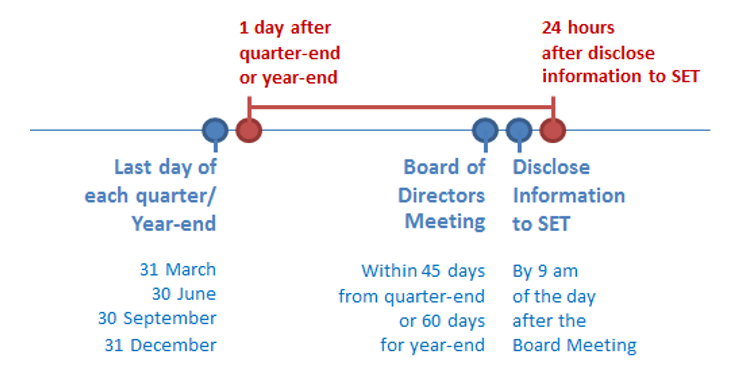
| Other guidelines regarding shareholders and stakeholders | Disclosure | The Board of Directors recognizes the importance of information disclosure in guiding investor and stakeholder decisions. To ensure comprehensive and effective communication, the Company is committed to disclosing both financial and non-financial information in a complete, accurate, timely, and transparent manner through channels that are easily accessible, equitable, and reliable. All disclosures must align with the Company’s corporate information policy and insider information policy, which have been communicated to directors, management, and employees. The Company complies fully with all relevant regulations and standards set by the Securities and Exchange Commission (SEC) and the Stock Exchange of Thailand (SET). Regular evaluations of the disclosure process, along with monitoring new regulations, ensure that the Company’s practices remain up to date and fully compliant. The information disclosed by the Company consists of both financial and non-financial information. Financial information is disclosed through audited financial statements, prepared in accordance with Thai Financial Reporting Standards, and reviewed by an external auditor approved by the SEC. These statements are approved by the Audit Committee and Board before being made publicly available. Non-financial information includes dividend payments, management discussions, risk management strategies, shareholder meeting notices, minutes, and any other relevant information necessary for investment decisions, as mandated by the SEC and SET. Additionally, the Company publishes an annual corporate governance report as part of its annual registration statement (56-1 One Report). The Investor Relations (IR) team is responsible for developing and implementing the annual investor relations plan to ensure efficient communication processes and channels. These channels are used to convey the Company’s vision, mission, strategies, financial performance, and operational results to shareholders, investors, analysts, fund managers, and bankers, both domestically and internationally, in compliance with SEC and SET regulations. Additionally, to prevent insider trading and ensure fairness and equal access to information, the Company has instituted a Silent Period, during which no meetings or responses related to performance are held with investors or analysts in the 14 days leading up to the announcement of the Company’s quarterly and annual results. For more information, please visit Company’s website under the Investor Relations section. Directly and indirectly, SPRC communicates its performance and Company information, as outlined below:
Details of the Investor Relations activities aimed at disclosing information to international and local investors, institutional investors, retail investors, analysts, fund managers, and the broader investment community in 2025 are outlined in the table below:
*both domestic and international **both domestic and international investors For further information, investors and interested persons may contact the Company’s Investor relations division at Tel. +66 (0) 38 699 887 or Fax. +66 (0) 38 699 999 ext. 7887 or send email to ir@sprc.co.th.I In addition, the Company provides a central point of investor contact as follow: -
|
Code of Conduct
Has a Business Code of Conduct
Yes
Code of Conduct Description
The Board of Directors has established the Business Conduct Policy to be guidance for the Company’s business operation, strictly adhere to and place importance on operating the business with integrity, fairness and transparency, including compliance with the relevant laws and regulations. The Board of Directors has regularly reviewed such Business Conduct Policy. The directors, executives, and all employees are required to comply with the Company’s Business Conduct Policy at all times.
Code of Conduct Practices
| Guideline | Detail |
|---|---|
| Prevention of Misuse of Inside Information | The Company expects the directors, executives, and employees in all levels to act in the best interests of the Company, and to make business decisions free from conflicts of interest. Where a potential conflict of interest may arise, directors, executives, or employees must disclose such potential conflict transparently and refrain from participating in any consideration or decision related to the matter, in order to prevent personal interests from influencing the Company’s interests. The key guidelines are as follows:
In addition, the Company has established the No Gift Policy to promote transparent culture and to reduce risk regarding conflicts of interest. The key guidelines are as follows:
|
| Anti-corruption |
|
| Whistleblowing and Protection of Whistleblowers | The Company has provided an opportunity for employees and all groups of stakeholders to lodge complaints in a transparent manner if they become aware of any actions that may not be in compliance with the Company’s Code of Business Conduct. Such complaints can be reported through the following reporting channels:
To the Board of Directors at: BOD-Report@sprc.co.th The Company places importance on maintaining confidentiality as necessary in the process of investigating reported complaints. The Company ensures that complaints, including the identity of the complainant, are kept confidential, taking into consideration and in alignment with the Company’s necessity to investigate the reported misconduct. In addition, the Company will conduct the investigation of complaints carefully and fairly, through a transparent process. Once the complaint has been handled in accordance with the prescribed procedures, the Company will consider proposing preventive measures to avoid the recurrence of such misconduct and will report the conclusions of the complaint to the Board of Directors through the Audit Committee. |
| Preventing the Misuse of Inside Information | With respect to insider trading governance, directors, executives, and employees who have access to the Company’s material non public information are strictly prohibited from using such information for personal gain, whether for themselves or for others. This prohibition includes trading in the Company’s securities on the stock exchange. |
| Giving or receiving gifts, entertainment, or business entertainment | The Company has established the No Gift Policy to promote transparent culture and to reduce risk regarding conflicts of interest. The key guidelines are as follows:
|
| Compliance with laws, rules and regulations | The Company respects and strictly complies with all applicable laws and regulations governing its operations, including both Thai and foreign laws. This includes, without limitation, international trade laws and anti boycott laws. |
| Use and maintenance of data and assets | The Company must implement appropriate measures to protect its information and intellectual property, including the use of computers, email, and social media. All employees are required to be aware that safeguarding such information is a shared responsibility. In addition, the Company places importance on the protection of personal data, which the "Personal Data" is information that can directly or indirectly identify an individual, including employees, contractors, directors, shareholders, customers, and anyone else with whom SPRC does business. Personal data is one of important assets. In handling personal data, SPRC must comply with the requirements of Thailand’s Personal Data Protection Act B.E. 2562 (as amended) and relevant regulations in case of cross-border transfer of personal data. Personnel who handle personal data are responsible for understanding their roles and responsibilities as well as the applicable obligations, such as collection, use and disposal of personal data as required by law. |
| Anti-competitive | The Company promotes free and fair trading system and strictly adheres to relevant competition laws, including avoiding any conduct that may contravene applicable trade competition regulations. |
| Cyber security | The Company has expanded and formalized the roles and responsibilities of the IT Steering Committee to strengthen governance and alignment with business strategy. The Committee’s responsibilities include:
IT Risk Management and Compliance With the increasing reliance on digital platforms, cloud-based services, and interconnected systems, the Company continues to face elevated IT and cybersecurity risks, including system disruption, data unavailability, unauthorized access, and cybercrime. The Company’s IT systems and underlying infrastructure support critical business processes and refinery operations and are therefore managed as key enterprise assets. IT systems and information assets are classified based on criticality and security requirements. Appropriate security controls, including access controls, monitoring, and protection mechanisms, are implemented in accordance with international standards and industry best practices. Clear roles and responsibilities for information protection are defined for management, system owners, custodians, and users. The IT Security framework defines policies, procedures, and essential business processes to prevent, detect, and respond to information security incidents. Ongoing cybersecurity awareness and training programs are conducted to ensure that employees and contractors understand the importance and business impact of information protection. The Company regularly reviews and audits its IT policies, procedures, and system/application controls to ensure continued compliance. Independent assessments and audits are performed by external accredited and certified bodies as part of the Company’s ISMS and compliance assurance activities. IT Security Policy The IT Security Policy is designed to ensure confidentiality, integrity, and availability of information, as well as the overall security of computers, networks, applications, services, and other IT-related resources. The policy is risk-based and aligned with operational requirements and international standards. The IT Security Policy covers all key aspects of business processes and activities, including:
IT Infrastructure and Evergreen Process The Company’s IT network and infrastructure are designed with standardized and layered security controls to protect systems and information from malware, cyber threats, and unauthorized access. To further strengthen cybersecurity capabilities, the Company operates a Managed Security Operations Center (SOC) with 24x7 monitoring to prevent, detect, respond to, and recover from security incidents. An evergreen approach is applied to ensure that IT systems remain robust, reliable, and secure. Key activities include regular patching of systems and endpoints, continuous vulnerability management, and periodic testing and self-assessments. Business Continuity Planning (BCP) and Disaster Recovery Planning (DRP) are regularly tested to ensure readiness and resilience. The Company conducts an annual system penetration test to identify and address potential vulnerabilities and performs cybersecurity tabletop exercises to validate incident response effectiveness and coordination during emergency scenarios. In 2025, the Company delivered mandatory cybersecurity training for employees and contractors through two formal sessions conducted in July and December. All personnel with access to the Company network were required to attend both sessions. In addition, quarterly phishing simulation exercises were conducted throughout the year to reinforce awareness and assess user readiness in safeguarding information assets. During Q4, the IT function also conducted IT roadshows across all departments, focusing on phishing awareness and the transition to the new Enterprise Information Management (EIM) framework. In addition, the Company has continued certification for the ISO 27001:2022 standard, demonstrating the effectiveness of our overall IT network and systems with sustained cybersecurity for refinery operations and information protection. Achieving ISO 27001 certification reflects our commitment to continuously improving IT systems while enhancing customer and stakeholder confidence, strengthening risk management, and providing a robust cybersecurity framework that underpins future security initiatives. |
| Environmental management | SPRC family has established environmental management policies and practices under the Environmental, Health and Safety Management System (EHS Management System) manual which covers prevention and management of Spills, Waste disposal, Air quality, Energy efficiency and Water management. The compliance of SPRC EHS-Management System elements with the elements of ISO 9001, 14001 and 45001. In addition, the Company is committed to achieving "Operational Excellence", with a strong emphasis on safety throughout its operations, including employee safety, process safety, community health and safety, and environmental protection. The Company’s operations are also carried out with a focus on preventing and mitigating environmental impacts. |
| Human rights | The Company place importance to respecting and protecting human rights in every operation process by adhering to the universal human rights standard which does not promote the discrimination on the basis of race, religion, sex, age, or social and economic status, while promote the equality, freedom and human dignity. The Company expresses its clear commitment to operating business with the responsibility to all stakeholders in its value chains by specifying the guidance covering three core dimensions: Employees, Communities, and Business Partners. |
| Occupational health and safety | The Company places the highest priority on the health, hygiene, and safety of employees, contractors, business partners, and all stakeholder groups, recognizing that safety is a critical foundation of sustainable business operations. Under the vision “Everyone Goes Home Safely, Every Day,” the Company has established a systematic Occupational Health and Safety Management System framework to protect the life, health, and well-being of all personnel throughout the Company’s value chain. The Company applies the ISO 45001 international standard as its safety management guideline, covering hazard identification and risk assessment across all steps of operational processes to control and reduce risks that may affect employees, communities, and the environment. The Company has also established preventive measures and responsive measures to ensure that all production activities can be carried out safely, efficiently, and continuously. In terms of competency development, the Company provides regular safety training programs for both theoretical and practical aspects, such as fire prevention, confined space work, basic first aid, and emergency response, to enhance employees’ knowledge, understanding, and readiness to handle potential situations. In addition, the Company proactively takes care of employee health through risk-based health examinations, annual health monitoring, and physical and mental health promotion to create a good, safe, and sustainable working environment. For contractors and business partners, the Company requires all parties to comply with safety standards at the same level as the Company’s employees, with safety assessments conducted before work begins and during operations, as well as continuous monitoring and evaluation of occupational health and safety performance, to ensure that all value chain activities follow safety principles and social responsibility. At the governance level, the Board of Directors plays an important role in setting policy, overseeing, and monitoring occupational health and safety performance to ensure that the Company’s operations comply with laws, international standards, and the Company’s safety policies, with the ultimate goal of “No One Get Hurt.” This reflects the Company’s commitment to building a proactive safety culture that is transparent, verifiable, and become a role model in the country’s energy industry. |
Promoting Compliance with the Code of Conduct
Promotes Compliance by Directors, Executives and Employees
Yes
Description
The Company provides Business Conduct training for all new employees to ensure our new employees have awareness, understanding and be able to comply with the Business Conduct Policy.
In addition, the Company continues to reinforce our staff’s knowledge and understanding of the Business Conduct and ensure they are compliant. We also communicated via e-mail about the revision of Business Conduct Policy, Anti-Corruption Policy and Anti-Corruption Procedure to robust the employees’ awareness for the compliance with the policy.
The Business Conduct Policy and the Anti-Corruption Policy have been publicized on SPRC’s Website which is an accessible channel for all stakeholders.
Anti-Corruption Networks & Projects
Joined or Declared Intent to Join Anti-Corruption Networks
Yes
Networks & Projects Joined
| Network / Project | CAC Certified |
|---|---|
| Thai Private Sector Collective Action Against Corruption: CAC | Y |
| United Nations Global Compact (UNGC) | |
| Participation of anti-Corruption networks and initiatives |
Material Changes & Developments in CG
Reviewed the CG Policy or Board Charter in the Past Year
Yes
Material Changes or Developments in the Past Year
No
Policy Review — Description
As assigned by the Board of Directors, the Nomination, Remuneration, and Corporate Governance Committee is responsible for reviewing compliance with the Principles of Good Corporate Governance (CG Code) and proposing improvements to the Board of Directors for the development of the Company's operations in accordance with good corporate governance principles. The Nomination, Remuneration, and Corporate Governance Committee annually considers the assessment scores for compliance with the Principles of Good Corporate Governance (CGR). It has reviewed the application of the CG Code to ensure its suitability for the Company and has also considered the ASEAN CG Scorecard principles.
The Company continuously develops its corporate governance in accordance with the recommendations of the Nomination, Remuneration, and Corporate Governance Committee, such as promoting director training, recruiting independent female directors to join the Board, conducting skill matrix assessments and utilizing them to evaluate the Board's composition and recruit directors with qualifications suitable for the Board's composition, considering the qualifications of independent directors, conducting self-assessments for individual directors, the Board, and each sub-committee, and reviewing the roles and responsibilities of sub-committees as per their charters to ensure their appropriateness.
Furthermore, the Nomination, Remuneration, and Corporate Governance Committee has reviewed the new CGR assessment criteria and has considered whether the Company should appoint additional sub-committees, such as a Sustainable Development Committee or a Risk Committee. Currently, the Company has three sub-committees: the Audit Committee, the Nomination, Remuneration, and Corporate Governance Committee, and the Human Resources Committee. Upon consideration, it was determined that, at present, there is no need for the Company to appoint additional sub-committees, as management regularly reports progress on sustainable development to the Board and on risk management to the Audit Committee every quarter. The Nomination, Remuneration, and Corporate Governance Committee will regularly review the necessity and appropriateness of appointing additional sub-committees.
Implements the CG Code for Listed Companies
No
CG Code — Description
In 2025, the Company fully complies with the principles of good corporate governance for listed companies as prescribed by the Stock Exchange of Thailand, except for the following matters, which the Nomination, Remuneration, and Governance Committee has reviewed and deemed the Company's current practices to remain appropriate.
For a Board of Directors meeting to constitute a quorum when the Board votes, there must be at least two-thirds of the total number of directors present.
The Company's Articles of Association stipulate that a quorum for a Board of Directors meeting must consist of at least half of the total number of directors. Given the size and composition of the Board of Directors, the Board has considered and deemed the quorum requirement specified in the Company's Articles of Association to be appropriate.
The Chairman is an independent director.
The Board of Directors has the authority to appoint the Chairman. The Board appointed Mr. Brant Thomas Fish, a non-executive director, as Chairman, and Ms. Kamonwan Wipulakorn, an independent director, as Vice Chairman. The Vice Chairman is responsible for acting on behalf of the Chairman in cases where the Chairman does not attend the meeting or is unable to perform his duties at that meeting.
The Nomination, Remuneration, and Governance Committee comprises more than 50% independent directors.
The Company's Nomination, Remuneration, and Governance Committee consists of 5 members in total, with 2 out of 5 members being independent directors, representing 40%.
The Board of Directors comprises more than 50% independent directors.
The Board of Directors consists of 4 independent directors out of a total of 9 directors, representing 44%.
There is an independent director who has served as a director for more than 9 years.
There is one independent director who has served for more than 9 years. However, the Board of Directors has carefully and prudently considered his suitability, qualifications, and experience and found that Mr. Robert Stair Guthrie possesses appropriate qualifications, experience, knowledge, and a thorough understanding of the Company's business, which is highly beneficial to the Company. Furthermore, Mr. Robert Stair Guthrie can fully perform his duties as an independent director, providing opinions and exercising independent judgment.
The Board of Directors has not appointed a Sustainability Committee and a Risk Management Committee, each comprising at least one director.
The Board of Directors has considered and determined that, at present, the Company does not need to appoint additional sub-committees, as the management regularly reports progress on sustainable development to the Board and reports on risk management to the Audit Committee every quarter.
Other CG Performance & Outcomes
In 2025, the company received an excellent (5-star) rating in the Corporate Governance Report (CGR) assessment, conducted by the Stock Exchange of Thailand (SET) and the Thai Institute of Directors (IOD). It also achieved a perfect score of 100 in the shareholder meeting assessment, conducted by the Thai Investors Association.
Furthermore, in 2025, the company elevated its CG operations to the ASEAN level by receiving the ASEAN Asset Class PLCs award from the 2024 ASEAN Corporate Governance Scorecard assessment of listed companies in the ASEAN region. This assessment ranks the corporate governance of listed companies in six ASEAN countries: Indonesia, Malaysia, the Philippines, Singapore, Thailand, and Vietnam. SPRC is one of 74 Thai listed companies to receive this award, out of a total of 250 ASEAN companies recognized.