

Board Performance · 2025
In this section13 topics
- Prevention of Conflicts of Interest3 items
- Prevention of the Use of Inside Information3 items
- Anti-Corruption4 items
- Whistleblowing4 items
- Selection of Directors & Chief Executives7 items
- Selection of Independent Directors2 items
- Director Development2 items
- Evaluation of Board & Subcommittee Performance3 items
- Subcommittees1 item
- Meeting Attendance & Remuneration5 items
- Supervision of Subsidiaries & Associated Companies4 items
- Board Duty Performance — Overview1 item
- Audit Committee Duty Performance1 item
Prevention of Conflicts of Interest
Has the Company Acted to Prevent Conflicts of Interest?
Yes
Operations in the Past Year
The Board of Directors has established a Conflicts of Interest Policy, which covers types of activities that may give rise to conflicts of interest. This policy applies to all directors, executives, and employees which are required to act in SPRC’s best interest and avoid any behavior or activity that conflicts with SPRC’s interest, including activity that may adversely affect SPRC’s reputation or relations with others, or interfere with the fulfillment of Personnel’s job or role responsibilities.
Personnel’s activities at all times must be in the best interests of SPRC. Personnel may not use their positions or influence, information to which they have access as a result of their relationship with SPRC, or SPRC’s assets or resources, for their personal gain, for insider trading, or for improper benefits of others.
In the past year, there is no compliant relating to the Conflicts of Interest raised through the Company's designated reporting channels.
Number of Conflict-of-Interest Cases
| Metric | Current Year | Previous Year | Two Years Ago |
|---|---|---|---|
| Total number of cases or issues related to conflicts of interest (cases) | 0 | 0 | 0 |
Prevention of the Use of Inside Information
Has the Company Acted to Prevent the Use of Inside Information?
Yes
Operations in the Past Year
The Board of Directors has established a Conflicts of Interest Policy, which includes the prevention of insider trading. This policy applies to directors, executives, and employees who have access to material inside information that has not been publicly disclosed or that has been obtained by virtue of their position or duties within the Company. Such persons are prohibited from using such information for personal benefit, whether for themselves or for others. This prohibition also includes trading in the Company’s securities on the Stock Exchange.
In the event that directors or executives choose to invest in the Company’s securities, the Company’s directors and executives are required to report any changes in their holdings of the Company’s securities arising from the purchase, sale, transfer, or receipt of transfer of the Company’s securities within three business days from the date of such change. Such changes in securities holdings are also reported to the Audit Committee at every quarterly meeting.
In the past year, there is no compliant relating to Insider Trading raised through the Company's designated reporting channels.
The report of the Company’s securities held by directors (including spouse and minor children)
As of 31 December 2025 are as follow:
Name | Number of Shares | Changing Number of Shares Increase (Decrease) | ||
As of 31 December 2024 | As of 31 December 2025 | |||
1 | Mr. Brant Thomas Fish Spouse and minor children | - - | - - | - - |
2 | Ms. Kamonwan Wipulakorn Spouse and minor children | - - | - - | - - |
3 | Mr. Robert Stair Guthrie Spouse and minor children | - - | - - | - - |
4 | Mr. Rapee Sucharitakul Spouse and minor children | - - | - - | - - |
5 | Mr. Panun Prachuabmoh 1 Spouse and minor children | - - | - - | - - |
6 | Mr. Ranga Rama Kumar Sreeramagiri Spouse and minor children | - - | - - | - - |
7 | Ms. Melissa White Spouse and minor children | - - | - - | - - |
8 | Mr. Tat Win Law 2 Spouse and minor children | - - | - - | - - |
9 | Mr. Herbert Matthew Payne II Spouse and minor children | - - | 190,000 - | 190,000 - |
Directors who resign or complete their term during the year | ||||
1 | Mr. Pliu Mangkornkanok 3 Spouse and minor children | - - | - - | - - |
2 | Mr. Robert Joseph Dobrik 4Spouse and minor children | - - | - - | - - |
1Mr. Panan Prachuabmoh was appointed as a Director of the Company by the Annual General Meeting of Shareholders for the year 2025. All such appointments shall be effective from 10 April 2025.
2Mr. Tat Win Law was appointed as a Director by the Board of Directors’ Meeting No. 2A/2025. Such appointment shall be effective from 1 July 2025.
3Mr. Pliu Mangornkanok completed his term of office as an Independent Director as of the date of the Annual General Meeting of Shareholders for the year 2025.
4Mr. Robert Joseph Dobrik resigned from his positions as Director and Chief Executive Officer, with the resignation effective from 1 July 2025.
The report of the Company’s securities held by Management as defined by the SEC (including spouse and minor children)
As of 31 December 2025 are as follow:
Name | Number of Shares | Changing Number of Shares Increase (Decrease) | ||
As of 31st December 2024 | As of 31st December 2025 | |||
1 | Mr. Herbert Matthew Payne II Spouse and minor children | - - | 190,000 - | 190,000 - |
2 | Mr. Narong Triyotee Spouse and minor children | 347,300 167,600 | 347,300 167,600 | - - |
3 | Mr. Pongkorn Chochuwong Spouse and minor children | 347,300 - | 347,300 - | - - |
4 | Mr. Shashank Shreepal Nanavati Spouse and minor children | - - | - - | - - |
5 | Mrs. Nutsara Somkiatweera Spouse and minor children | - - | - - | - - |
6 | Mrs. Jariya Wuensche Spouse and minor children | 130,800 - | 130,800 - | - - |
7 | Mr. Narongrit Chaiyaras Spouse and minor children | - - | - - | - - |
8 | Ms. Hathairat Thongmak Spouse and minor children | - - | - - | - - |
9 | Mr. Konlayuth Chotepatana Spouse and minor children | - - | - - | - - |
10 | Mr. Sakchai Thamsuruk Spouse and minor children | 267,100 78,500 | 267,100 78,500 | - - |
Managements transition during the years | ||||
1 | Mrs. Sudpreeda Pongkajonton Spouse and minor children | 100,800 - | 100,800 49,500 | |
2 | Ms. Yanee Kachai Spouse and minor children | - - | - - | - - |
3 | Mr. Robert Joseph Dobrik Spouse and minor children | - - | - - | - - |
4 | Ms. Chaowasri Luengratanakorn Spouse and minor children | 40,000 - | 40,000 - | - - |
Mrs. Sudpreeda Pongkajonton relieved from the position of Vice President, Information and Digital Technology, effective 15 May 2025.
Miss Yanee Kachai (Chevron Personnel Secondment) was appointed to the position of Vice President, Information and Digital Technology, effective 15 May 2025 and relieved from this position on 1 November 2025
Mr. Robert Joseph Dobrik relieved from the position of Chief Executive Officer, effective 1 July 2025
Mr. Herbert Matthew Payne II, Board of Directors has been appointed to the position of Chief Executive Officer, effective 1 July 2025
Mr. Sakchai Thamsuruk was transferred from the position of Vice President, Value Chain Optimization to the position of Vice President, Corporate Business Development, effective 1 October 2025
Miss Chaowasri Luengratanakorn was held the position of Vice President, Strategy, Policy and Development
until 30 September 2025Mr. Narongrit Chaiyaras was transferred from the position of Vice President, Fuels Marketing and Operations to the position of Vice President, Strategy, Policy and Development, effective 1 October 2025
Mr. Konlayuth Chotepatana, Vice President, Technology and Engineering has been appointed to the position of Acting Vice President, Information and Digital Technology, effective 1 November 2025
Number of Inside-Information Cases
| Metric | Current Year | Previous Year | Two Years Ago |
|---|---|---|---|
| Total number of cases or issues related to the use of inside information to seek benefits (cases) | 0 | 0 | 0 |
Anti-Corruption
Has the Company Acted on Anti-Corruption?
Yes
Operations in the Past Year
The Company regularly conducts enterprise risk assessment covering multiple dimensions relevant to business operations, including corruption risks, to ensure effective, transparent, and auditable operations. Annual risk assessments are conducted alongside quarterly risk reviews to ensure effective corruption risk management and alignment with national good practices.
The Company also cooperates with the Thailand Private Sector Collective Action Coalition Against Corruption (Thailand Private Sector Collective Action Coalition Against Corruption: CAC), and the Company is in the process of preparing to submit the documents for renewing membership certification in accordance with the program’s requirements.
In the past year, no complaints were identified as being related to acts of fraud or corruption by the Company.
Form of Anti-Corruption Operations
| Operation |
|---|
| Assessment and identification of corruption risk |
| Communication and training for employees on anti-corruption policy and guidelines |
| The participation in anti-corruption projects |
Number of Corruption Cases
| Metric | Current Year | Previous Year | Two Years Ago |
|---|---|---|---|
| Total number of cases or issues related to corruption (cases) | 0 | 0 | 0 |
Whistleblowing
Has the Company Implemented Whistleblowing Procedures?
Yes
Operations in the Past Year
The Company has provided an opportunity for employees and all groups of stakeholders to lodge complaints in a transparent manner if they become aware of any actions that may not be in compliance with the Company’s Code of Business Conduct. Such complaints can be reported through the following reporting channels:
To the Corporate Compliance Officer at: CorporateCompliance@sprc.co.th
To the Internal Audit at: IA-Report@sprc.co.th
To the Audit Committee at: AC-Report@sprc.co.th
To the Board of Directors at: BOD-Report@sprc.co.th
The Company places importance on maintaining confidentiality as necessary in the process of investigating reported complaints. The Company ensures that complaints, including the identity of the complainant, are kept confidential, taking into consideration and in alignment with the Company’s necessity to investigate the reported misconduct. In addition, the Company will conduct the investigation of complaints carefully and fairly, through a transparent process. Once the complaint has been handled in accordance with the prescribed procedures, the Company will consider proposing preventive measures to avoid the recurrence of such misconduct and will report the conclusions of the complaint to the Board of Directors through the Audit Committee.
In the past year, a total of five complaints were submitted through the designated reporting channels which the Company has completed the investigations for all cases in accordance with the Allegation Management procedure described above.
Number of Whistleblowing Cases
| Metric | Current Year | Previous Year | Two Years Ago |
|---|---|---|---|
| Total number of cases or issues received through whistleblowing channels (cases) | 5 | 8 | 0 |
Details of Whistleblowing Cases
| Status | Period Type | Start of Period | End of Period | Details of the Case or Issue | Investigation Results | Corrective Actions | Case or Issue |
|---|---|---|---|---|---|---|---|
| Incident no longer subject to action | month/year Range | 2024-01 | 2025-09 | Internal Work Process and Ethical Standards in accordance with the Company's Business Conduct Policy | In 2025, two cases were found to be in violation of the Company’s Business Conduct Policy. | Appropriate actions were taken with the responsible individuals, and preventive measures were proposed to avoid recurrence of such complaints in the future. | 3201 · Description: Other · 3195 · Description: Gift giving or receiving, entertainment, or business hospitality · 3193 · Description: Information and assets usage and protection |
Selection of Directors & Chief Executives
Selection — Introduction
The Company’s Board of Directors has established guidelines for the nomination of directors to serve as a framework for the operations of the Nomination, Remuneration and Corporate Governance Committee in nominating directors, in order to comply with the Stock Exchange of Thailand’s Good Corporate Governance practices for listed companies. The Nomination, Remuneration and Corporate Governance Committee is responsible for reviewing the policies and procedures for the nomination of new directors, as well as considering the necessary and desirable qualifications of new directors. The Company has nominated suitable candidates for directorship by also taking into consideration the list of professional directors in the directory of the Thai Institute of Directors Association (IOD). Any person appointed as a director must possess the following qualifications:
Possess complete qualifications and have no prohibited characteristics as prescribed under:
The Public Limited Companies Act;
The Securities and Exchange Act;
Notifications of the Securities and Exchange Commission;
Notifications of the Capital Market Supervisory Board; and
The Company’s Articles of Association.
Have knowledge, ability, and expertise relevant to the Company’s business operations, or possess work experience that is beneficial to the Company’s business.
Demonstrate leadership, vision, morality, ethics, integrity, and the ability to perform duties as a director with due care and reliability.
Hold directorships in no more than five companies listed on the Stock Exchange of Thailand (including the Company).
In accordance with the Company’s Articles of Association, at each Annual General Meeting of Shareholders, one-third of the directors shall retire by rotation. Directors whose terms expired at the Annual General Meeting of Shareholders for the year 2025, held on 10 April 2025, totaled three persons, namely Ms. Kamonwan Wipulakorn, Mr. Robert Joseph Dobrik, and Mr. Pliu Mangkornkanok.
The Annual General Meeting of Shareholders for the year 2025 resolved to reappoint Ms. Kamonwan Wipulakorn and Mr. Robert Joseph Dobrik as directors for another term, and to appoint Mr. Panan Prachuabmoh as an Independent Director in place of Mr. Pliu Mangkornkanok, who had served as an Independent Director for a total of nine years.
Selection Process — Introduction
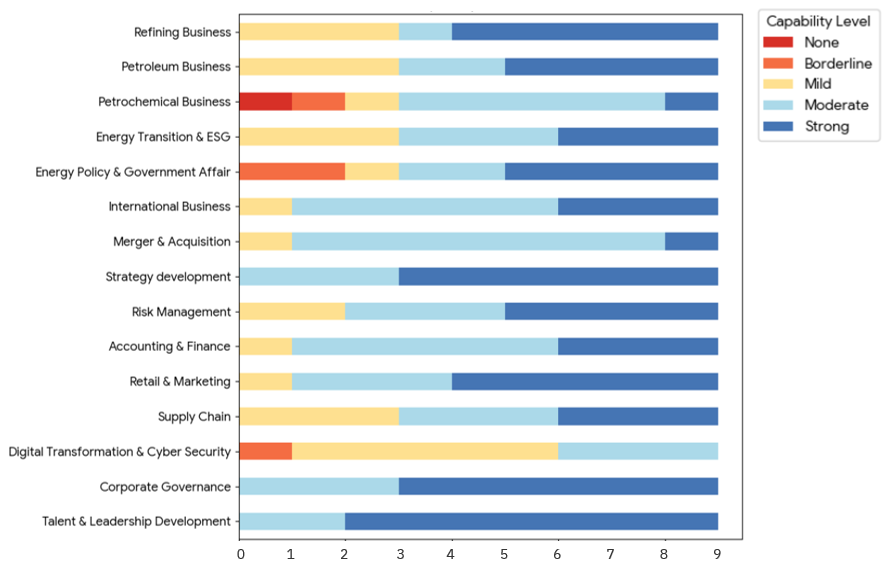
In the nomination of directors, the Board of Directors conducts an annual assessment of the Board composition to consider whether the Board comprises directors with knowledge and capabilities from diverse fields and whether such composition is appropriate for working together to determine the Company’s vision, mission, strategies, and policies, as well as to monitor and oversee the Company’s business performance. The Nomination, Remuneration and Corporate Governance Committee has considered and determined the skills, knowledge, capabilities, and areas of expertise that the Board of Directors should possess, through the use of a skills matrix assessment.
Based on the assessment for the year 2025, the Board of Directors evaluated the composition of the Board and concluded that the Board has an appropriate composition, comprising directors with a diverse range of skills, knowledge, capabilities, and professional experience across various fields.
The Company arranged for directors to conduct self-assessments of their expertise in various areas through a skills matrix, with proficiency levels classified into five levels, namely: none, fairly low, low, moderate, and high. A total of nine directors completed the self-assessment, with the number of directors possessing moderate and high levels of expertise and experience in each area as follows.
Are Directors Selected Through the Nomination Committee?
Yes
Are Chief Executives Selected Through the Nomination Committee?
No
Number of Directors from Major Shareholders
5
Rights of Minority Shareholders on Director Appointment
The Company provides an opportunity for minority shareholders to propose individuals for consideration for appointment as directors. The Company has announced the criteria and qualifications of shareholders who are eligible to propose individuals for consideration for election as directors, as follows:
Be a holder of the Company’s ordinary shares, either individually or collectively with other shareholders.
Hold a minimum combined shareholding of not less than one percent of the total issued shares (or not less than 43,359,022 shares).
Have continuously held the Company’s shares in not less than the prescribed number for a period of at least one year as of the date of proposing the matter for inclusion in the meeting agenda or the date of proposing an individual for election as a director of the Company.
At the Annual General Meeting of Shareholders for the year 2025, no minority shareholders proposed any individuals for consideration for appointment as directors.
Method of Director Appointment
| Method |
|---|
| Method whereby each director requires approval votes more than half of the votes of attending shareholders with voting rights |
Selection of Independent Directors
Criteria for Selecting Independent Directors
Persons to be nominated as Independent Directors must possess the following key qualifications:
An Independent Director should not hold the position of Independent Director consecutively for more than three terms (each term being three years).
Hold shares of not more than 0.1 percent of the total voting shares of the Company, its parent company, subsidiaries, associates, major shareholders, or controlling persons of the Company. In this regard, the shareholdings of related persons of such Independent Director shall be included. This qualification is more stringent than the requirements prescribed by law.
Not be, and have not been, an executive director, employee, officer, regular-paid advisor, or controlling person of the Company, its parent company, subsidiaries, associates, sister subsidiaries, major shareholders, or controlling persons of the Company, unless such person has ceased to have such characteristics for a period of not less than two years prior to the date of submitting an application to the Office of the Securities and Exchange Commission. This prohibition shall not apply to cases where the Independent Director previously served as a government official or advisor to a government agency which is a major shareholder or controlling person of the Company.
Not be a person related by blood or legal registration, including being a parent, spouse, sibling, child, or child’s spouse, of other directors, executives, major shareholders, controlling persons, or persons proposed to be appointed as directors, executives, or controlling persons of the Company or its subsidiaries.
Have no, and have not had, business relationships with the Company, its parent company, subsidiaries, associates, major shareholders, or controlling persons of the Company in a manner that may interfere with the exercise of independent judgment. This includes not being, and not having been, a significant shareholder or controlling person of any person having business relationships with the Company, its parent company, subsidiaries, associates, major shareholders, or controlling persons of the Company, unless such person has ceased to have such characteristics for a period of not less than two years prior to the date of submitting an application to the Office of the Securities and Exchange Commission.
Such business relationships include ordinary course of business transactions, lease or rental of immovable property, transactions relating to assets or services, or the provision or receipt of financial assistance, including lending, borrowing, guarantees, or providing assets as collateral for liabilities, as well as other similar transactions that result in the Company or the counterparty having outstanding liabilities payable to the other party amounting to three percent or more of the Company’s net tangible assets or THB 20 million or more, whichever is lower. The calculation of such liabilities shall be made in accordance with the method for calculating the value of connected transactions as prescribed by the Notification of the Capital Market Supervisory Board on rules for entering into connected transactions, mutatis mutandis. In considering such liabilities, liabilities incurred during the one-year period prior to the date of having business relationships with the same person shall be included.
Not be, and have not been, an auditor of the Company, its parent company, subsidiaries, associates, major shareholders, or controlling persons of the Company, and not be a significant shareholder, controlling person, or partner of an audit firm where the auditor of the Company, its parent company, subsidiaries, associates, major shareholders, or controlling persons of the Company is affiliated, unless such person has ceased to have such characteristics for a period of not less than two years prior to the date of submitting an application to the Office of the Securities and Exchange Commission.
Not be, and have not been, any professional service provider, including legal or financial advisors, who receives service fees exceeding THB 2 million per year from the Company, its parent company, subsidiaries, associates, major shareholders, or controlling persons of the Company, and not be a significant shareholder, controlling person, or partner of such professional service provider, unless such person has ceased to have such characteristics for a period of not less than two years prior to the date of submitting an application to the Office of the Securities and Exchange Commission.
Not be a director appointed to represent directors of the Company, major shareholders, or shareholders who are related persons of major shareholders.
Not engage in businesses of the same nature and in significant competition with the Company’s or its subsidiaries’ businesses, and not be a significant partner in a partnership, or a director with management involvement, employee, officer, regular-paid advisor, or hold more than one percent of the total voting shares of another company that engages in businesses of the same nature and in significant competition with the Company or its subsidiaries.
Have no other characteristics that may impair the ability to express independent opinions regarding the Company’s operations.
Not hold directorships in more than five companies listed on the Stock Exchange of Thailand (including the Company).
Did Any Independent Director Have a Business or Professional Relationship?
No
Director Development
Development of Directors in the Past Year
When the Company appoints new directors, it arranges an orientation program for newly appointed directors. The program covers the Company’s organizational structure, business operations and production processes, operating performance in terms of production processes, raw material procurement and product sales, as well as financial performance. It also includes comparative performance information against companies engaged in the same type of business both in Thailand and overseas, together with information on corporate culture, the Code of Conduct, and policies related to corporate governance and good governance practices of the Company.
In 2025, there were two newly appointed directors, namely Mr. Panan Prachuabmoh and Mr. Thatt Win Law. The Company arranged orientation programs for the newly appointed directors on 29–30 April and 10–11 November, respectively.
In addition, the Board of Directors supported all directors in attending seminars and training programs related to directors’ roles and duties, organized by the Thai Institute of Directors Association (IOD), in order to enhance their knowledge and capabilities in performing their duties as directors and to comply with good corporate governance practices. The Nomination, Remuneration and Corporate Governance Committee was assigned to consider and monitor directors’ participation in training and seminars, and to recommend appropriate courses to directors. In 2025, two directors of the Company attended training programs organized by the IOD, as follows:
Ms. Kamonwan Wipulakorn
Intensive Strategic Foresight (ISF1/2025)
The Board’s Roles in Climate Governance (BCG 3/2025)
Mr. Panan Prachuabmoh
Advanced Audit Committee Program (AACP 59/2025)
Risk Management Program for Corporate Leaders (RCL 41/2025)
Strategic Board Master (SBM 16/2025)
ESG in Boardroom: Practical Guide for Board (ESG 10/2025)
National Director Conference 2025: Stronger Together through the World of Contradiction
Qualifications for Director Selection — Introduction
Any person appointed as a director must possess the following qualifications:
Possess complete qualifications and have no prohibited characteristics in accordance with the criteria prescribed under:
The Public Limited Companies Act;
The Securities and Exchange Act;
Notifications of the Securities and Exchange Commission;
Notifications of the Capital Market Supervisory Board; and
The Company’s Articles of Association.
Have knowledge, ability, and expertise relevant to the Company’s business operations, or possess work experience that is beneficial to the Company’s business.
Demonstrate leadership, vision, morality, ethics, integrity, and the ability to perform duties as a director with due care and reliability.
Hold directorships in no more than five companies listed on the Stock Exchange of Thailand (including the Company).
Evaluation of Board & Subcommittee Performance
Criteria for Evaluating Board Performance
The Board of Directors conducted an evaluation of its performance for the year 2025 through a self-assessment questionnaire comprising a total of 35 questions, covering six key areas as follows:
Board composition and qualifications, to assess the appropriateness and diversity of the Board composition, such as skills and experience that effectively support the Board’s performance and the Company’s business operations.
Roles, duties, and responsibilities of the Board of Directors, to assess the effectiveness of the Board in performing its duties to achieve the Company’s objectives.
Performance of individual directors, to assess directors’ performance in an objective and independent manner.
Board meetings, to assess the effectiveness and atmosphere of the meetings, as well as the adequacy of information prepared for the Board’s consideration at meetings.
Relationship with management, to assess the level of trust between the Board and management, as well as effective mutual support in the performance of their respective duties.
Directors’ self-development, to assess directors’ understanding of their roles and responsibilities, as well as their understanding of the Company’s business.
Evaluation of Board Performance in the Past Year
Process for the Board of Directors’ Self-Assessment
The Company Secretary is responsible for updating the self-assessment questionnaire to ensure its appropriateness and alignment with the roles and responsibilities of the Board of Directors as stipulated in the Board of Directors’ Charter.
The Company Secretary distributes the self-assessment questionnaire to all directors for the evaluation of the Board of Directors as a whole and collects the completed questionnaires in order to compile the scores and comments.
The Company Secretary presents the results of the Board of Directors’ self-assessment to the Nomination, Remuneration and Corporate Governance Committee for consideration.
The Chairman of the Nomination, Remuneration and Corporate Governance Committee reports the results of the Board of Directors’ self-assessment to the Board of Directors, together with the Committee’s opinions and recommendations, in order to enhance the effectiveness of the Board’s performance and ensure alignment with good corporate governance principles.
Results of the Board of Directors’ Self-Assessment
All nine directors completed the self-assessment of the Board of Directors as a whole. The overall self assessment result of the Board of Directors’ performance for the year 2025 achieved a score of 96 percent.
Evaluation Results
| Evaluated Body | Group — Carried Out? | Group — Grade / Average Score | Group — Grade / Full Score | Individual (Self-Assessment) — Carried Out? | Individual (Self-Assessment) — Grade / Average Score | Individual (Self-Assessment) — Grade / Full Score | Cross (Assessing Other Directors) — Carried Out? |
|---|---|---|---|---|---|---|---|
| Board Of Director | Y | 96% | 100% | Y | 98.5% | 100% | N |
| Audit Committee | Y | 97.5% | 100% | N | N | ||
| Other Subcommittee | Y | 97% | 100% | N | N | ||
| Other Subcommittee | Y | 99% | 100% | N | N |
Subcommittees
Subcommittees
| Results of the Subcommittee's Duty Performance |
|---|
The Board of Directors of Star Petroleum Refining Public Company Limited (SPRC) has appointed the Human Resources Committee, which is comprised of four non-executive Directors, who are appointed by the Board, and the CEO. The SPRC Human Resources Manager has been appointed as the committee secretary. The Human Resource Committee (HRC) underwent several membership changes in 2025 resulting from CEO succession, director rotations appointed by Chevron, and updates among independent directors. Mr. Robert Dobrik concluded his tenure as CEO/Director in the second quarter of 2025, succeeded by Mr. Herbert Matthew Payne II. The HRC Chairmanship was first assumed by Mr. Matthew Payne and subsequently transferred to Mr. Ranga Rama Kumar Sreeramagiri. Independent Directors included Mrs. Kamonwan Wipulakorn and Mr. Panun Prachuabmoh, with Mr. Prachuabmoh succeeding Mr. Pliu Mangkornkanok following Meeting No. 1. Further the additional of Mr. Brant Thomas Fish joined as a Chevron director. Committee maintained its practice of convening quarterly meetings and additional sessions as necessary. The committee assists the Board with regard to SPRC's human resources strategy, workforce development, and salary and bonus program, including approving SPRC's annual remuneration program and aspects of its incentive programs to support SPRC's business objectives of superior performance and long-term shareholder value growth. In addition, the committee reviews the appointment of certain senior leadership positions, succession planning for the senior leadership team, and the SPRC Human Resources Master Plan. In 2025, the Committee held 4 meetings on various matters. The following is a summary of key activities undertaken in 2025: 1.Human Resources Committee Charter: The committee reviewed the charter to ensure effective board governance of SPRC, included to formally appoint a non-executive Chair (effective January 2025) and define HRC responsibilities for appointment, performance appraisal, and succession planning of the CEO and senior leadership direct report to CEO, aligned with SEC (Thailand) definitions and SPRC Form 56-1 disclosures. 2.Remuneration program: The committee reviewed the Total Remuneration program and adjusted the special bonus and annual merit increase to maintain a competitive position among selected peer groups in order to attract, retain, and motivate a talented workforce. 3.Human Resource Committee Self-Assessment: The committee conducted a self-assessment, covering categories such as committee structure and qualifications, committee meetings, and reviewed the roles and responsibilities of the HR Committee. The process supports transparency, self-reflection, and assists the Board in guiding SPRC's human resources strategic action aligned with company objectives. 4.Human Resources Strategy: The Committee approved the People Strategy Master Plan 2025 and ensure SPRC focus on operating with excellence, maximizing shareholder returns, and advancing sustainability, supported by HR priorities are:
Organization Capability as One Team, High Performance Organizations
5.Effective Personnel Development Committee Governance The committee acknowledges the continuation of Personnel Development Committee structure at both management and function levels to enhance organizational capabilities through strategic talent management, senior leader succession planning, and organizational optimization, leadership development and empowering decision-making at the right levels. The Management Personnel Development Committee (MPDC) charter aligns with HR Committee's annual agenda to ensure Strategic HR actions are effectively deployed as SPRC enterprise one goal. 6.Succession Planning and Talent Management The committee acknowledges the development of identified successors for Senior Leadership team, including domestic and international secondment opportunities in Chevron to prepare successors backfill retirement pipeline and ready for future business. SPRC offers short and long-term assignments such as special project assignment focusing on leadership capability building and leverage technical expertise in 2026 Turnaround and Inspection event, Single Point Mooring Spill recovery and Chevron oversea assignment etc. 7.Leadership Development The committee acknowledges the ongoing learning and leadership development plan aiming through SPRC focuses on leadership development embedding We Lead framework from Chevron practice, enhancing trust in building relationships as foundation of success in line with SPRC IIF culture, offering 360 feedback for senior leaders via Korn Ferry consulting survey platform, and facilitating team and leadership integration workshops for new supervisors and leaders. 8.Strengthen Performance Management System (PMS) The Company continued to enhance its Performance Management System by incorporating the We Lead framework to align organizational and individual goals with business performance wheel objectives. The system links performance outcomes with consistent Merit Increase and SPRC Incentive Plan and is supported by competency development for supervisors and leadership, as well as SAP SuccessFactors implementation to enable performance management across the organization. 9.Digitalization and Workforce Capability Building SPRC strengthened digital capabilities through SAP SuccessFactors deployment and the Hekaton Camp hackathon under the Chevron One Team approach to upskill employees in digital solutions. To date, 4.6% of enterprise employees have participated, with a target to increase participation to 10%. A key HR digitalization efforts to drive operational effectiveness, the HR E-Form solution is the paper less and smarter process outcome, which digitalized five critical HR processes, reduced processing time by 70%, improved submission compliance from 60% to 95%, and shortened approval cycles to less than two days, enhancing compliance, efficiency, and real time decision support for leaders. In 2025, SPRC’s Human Resources Committee provided strategic oversight of human capital governance through four meetings, including the review of the Committee Charter, remuneration programs, and approval of the People Strategy Master Plan 2025. The Committee reinforced a One Team, high performance culture by embedding Chevron’s We Lead and Leading Performance frameworks across leadership development, performance management, succession planning, and digital capability initiatives, while sustaining SPRC’s Core Values to support operational excellence and strengthen the Company’s Employer of Choice position. |
In 2025, the Nomination, Remuneration and Corporate Governance Committee held a total of three meetings to consider matters as assigned by the Board of Directors and in accordance with its roles and responsibilities as stipulated in the Committee’s Charter. The key matters considered can be summarized as follows:
|
Meeting Attendance & Remuneration
Justification for Directors' Non-Attendance
Due to other urgent and necessary commitments
Meeting Attendance — Remark
Types of Remuneration of the Board of Directors
The Company’s Articles of Association require that the Annual General Meeting of Shareholders consider and approve directors’ remuneration. Directors are entitled to receive remuneration from the Company in the form of monthly remuneration, meeting allowances, gratuities, bonuses, or other benefits as stipulated in the Articles of Association or as approved by the shareholders’ meeting, which may be determined as a fixed amount or established as criteria to be applied from time to time.
The meeting of the Nomination, Remuneration and Corporate Governance Committee No. 1/2025 considered the directors’ remuneration for the year 2025. In doing so, the Committee studied the directors’ remuneration survey conducted by the Thai Institute of Directors Association and carefully considered various aspects of appropriateness, the Company’s operating performance and results, as well as benchmarking against directors’ remuneration of other oil refinery companies and listed companies in the same industry group.
In order to comply with good corporate governance principles in accordance with ASEAN requirements and to remain consistent with the Company’s directors’ remuneration practices in previous years, the Nomination, Remuneration and Corporate Governance Committee was of the view that the Board of Directors should not receive remuneration in the form of bonuses. Accordingly, the Committee proposed that directors receive remuneration only in the form of monthly remuneration and meeting allowances per meeting, with no bonuses or other forms of remuneration.
The Annual General Meeting of Shareholders for the year 2025 resolved to approve the Company’s directors’ remuneration for the year 2025, consisting of monthly remuneration and meeting allowances per meeting for Board of Directors’ meetings and sub-committee meetings, at the same rates as those approved in the previous year.
Remuneration of the Board of Directors
Remuneration or Benefits Payable to the Board
| Metric | Amount (Baht) |
|---|---|
| Remunerations or benefits pending payment to the board of directors over the past year (baht) | 0 |
Supervision of Subsidiaries & Associated Companies
Does the Company Have Subsidiaries or Associated Companies?
Yes
Is There a Mechanism for Overseeing Subsidiaries and Associated Companies?
Yes
Mechanism for Overseeing Management of Subsidiaries
In terms of corporate governance, the Board of Directors has established guidelines for the governance of subsidiaries and associated companies by appointing representatives of the Company to serve as directors of subsidiaries and associated companies in proportion to the Company’s shareholding. Such representatives of the Company are senior executives nominated to serve as directors of associated companies, and such nominations must be approved by the Board of Directors.
The Company’s representatives who serve as directors of subsidiaries and associated companies are responsible for acting in the best interests of the subsidiaries and associated companies, as well as overseeing compliance with relevant policies and laws, such as connected transactions, acquisition or disposal of assets, significant transactions, data retention, accounting records, and disclosure of information. This also includes ensuring the establishment of internal control systems, risk prevention measures, and the determination of approval authority limits for entering into significant transactions.
However, decisions on significant business matters must be approved by the Board of Directors, as the case may be, and management is required to report progress and significant operational matters to the Board of Directors on a regular basis.
In addition, the Company closely monitors the performance of its subsidiary. It also requires that the Business Conduct Policy and other relevant policies be applied to its subsidiary. Risk assessments are conducted, and a good internal control system is established to ensure and enhance operational efficiency and achieve objectives. The internal audit is conducted in both business operations and financial report aspects, as well as ensuring accurate and timely disclosure of information.
Oversight Mechanisms
| Mechanism |
|---|
| Sending representatives to act as directors, executives or controlling persons in proportion to shareholdings |
| Defining the scope of powers, duties and responsibilities of directors and executives who represent the company in setting important policies |
| Disclosure of financial information and operating results |
| Transactions between the Company and related persons |
| Other important transactions |
| Acquisition or disposal of assets |
| Internal control system of the subsidiary operating the core business is appropriate and sufficient in the subsidiary operating the core business |
Board Duty Performance — Overview
Board Duty Performance — Overall Description
The Company’s Board of Directors has fully discharged its duties in accordance with the laws, the Board of Directors’ Charter, and the principles of good corporate governance.
Audit Committee Duty Performance
Results of the Audit Committee's Duty Performance in the Past Year
The Independent directors have been duly appointed by the Board of Directors to act as Audit Committee. The Audit Committee members consist of independent directors, as follows:
Ms. Kamonwan Wipulakorn - Chairperson of the Audit Committee
Mr. Pliu Mangkornkanok (served as a member until 10 April 2025)
Mr. Robert Stair Guthrie
Mr. Rapee Sucharitakul
Mr. Panun Prachuabmoh (Commenced duties on 10 April 2025)
The Audit Committee possesses adequate knowledge, expertise and experience to perform its duties. In compliance with regulatory requirements, the Committee include at least one member with specialized knowledge in accounting and financial reporting to ensure the accuracy and reliability of the Company’s financial statement in accordance with applicable securities laws and the rule of the Stock Exchange of Thailand (SET). Furthermore, the Audit Committee supports the Board in fulfilling its oversight responsibilities which include ensuring the integrity of financial reporting, the effectiveness of risk management and internal controls, and adherence to ethics and regulatory standards. The Audit Committee is also responsible for assessing the quality of internal and external audits, as well as their independence and objectivity.
In 2025, the Audit Committee convened four meetings, with fu attendance at each session, to discharge its responsibilities in accordance with the Audit Committee Charter. The Audit Committee has summarized its key conclusions as follows.
Review f Financial Reports: In year 2025, the Audit Committee reviewed the Company’s quarterly and annual financial reports through meetings with the Chief Financial Officer (CFO) and the external auditor, Price Waterhouse Coopers (PwC), to evaluate the financial statements, related disclosures, and key accounting policies.The Audit Committee discussed PwC’s view and confirmed its independence. The Audit Committee has examined the consolidated financial statements as of December 31, 2025, and affirms that they conform to Thai Financial Reporting Standards, are accurate, and provide sufficient disclosure. Accordingly, the Audit Committee recommends their endorsement by the Board of Directors for presentation at the Annual General Meeting of Shareholders.
Review of Internal Controls System: The Audit Committee conducted an annual review of the internal control system, covering the five components – Control Environment, Risk Assessment, Control Activities, Information and Communication, and Monitoring Activities- along with 17 principles based on the COSO framework (Committee of Sponsoring Organizations of the Treadway Commission). The Company complies with the requirements of the U.S. Sarbanes-Oxley Act 2002, Section 404, regarding Management Assessment of Internal Control. The Audit Committee has confirmed that SPRC and its subsidiaries maintain an effective internal control system that is adequate, appropriate, and continuously strengthened. See Section 9.1, Internal Control, for a detailed description of the assessment.
Review of Corporate Risk Management:The Risk Management Committee, formed at the management level, is tasked with evaluating and monitoring the Company’s risk management framework. SPRC’s risk management framework covers all levels of the organization – strategic, department, and operational to safeguard both short-term and long-term objectives. The results of the risk assessment and monitoring are reported to the Audit Committee on a quarterly basis. The Audit Committee evaluates the effectiveness of risk management, including a review of actions taken to address strategic, operational, and compliance risk.The Audit Committee has acknowledged and is satisfied with the adequacy of the risk management process.
Review of Compliance:The company has appointed a Corporate Compliance Officer (CCO) to ensure compliance with and promote Business Conduct and Anti-Corruption policies.The Audit Committee receives quarterly reports on compliance and the FCPA (Foreign Corrupt Practice Act).The Whistleblowing channels for reporting suspected or potential policy violations have been communicated to both internal staff and external stakeholders. The Audit Committee has reviewed the reports and is satisfied that the Company’s compliance processes are consistent with legal requirements and align with its Business Conduct and Anti-Corruption Policies.
Review of Related Party Transactions (RPT): The Audit Committee reviews and provides its opinion on Related Party Transactions before being submitted for approval by the Board of Directors. SPRC maintains strong governance over Related Party Transactions to ensure that they comply with contractual terms, with quarterly reviews by Internal Audit and oversight by the Audit Committee. The Audit Committee is satisfied that the Related Party Transactions were verified for compliance, transparency, adherence to arm’s length principles and conducted under normal business conditions and disclosed in Section 9.2 Related Party Transaction of this report.
Review of Internal Audit Functions: The Audit Committee annually reviews and approves the Internal Audit Charter, annual audit plan, and Key Performance Indicator (KPIs). The Audit Committee conducts quarterly reviews of the internal audit function’s performance, independence, and objectivity to ensure effective oversight of governance, risk and control processes and reviewed key findings and management responses. The Audit Committee holds quarterly meetings with the Head of Internal Audit withoutthe presence of management. The Audit Committee confirmed that internal audit operations were independent, effective, and aligned with the International Standard for the Professional Practice of Internal Auditing.
Review of External Auditor: The Audit Committee oversees the external auditor, PricewaterHouse coopers ABAS Ltd (PwC)’s independence, qualifications, and objectivity. PwC attends quarterly Audit Committee meetings to provide updates on audit procedures and preliminary findings, enabling the Committee to oversee audit execution and results.The Audit Committee also meets privately with PwC representatives without management present to encourage open and transparent communication.In year 2025, PwC did not provide any non-audit services to the Company.The Audit Committee is satisfied with its independence, objective, qualifications, expertise, resources, and the overall effectiveness of the audit process
Appointment of the External Auditor and determination of Remuneration for the year 2025:The Audit Committee has evaluated PwC’s independence, qualifications, performance, and industry expertise.The Audit Committee recommend its appointment and fees to the Bord of Directors for endorsement and presentation at the Annual General Meeting of Shareholders.
Audit Committee Self- Assessment: The Audit Committee conducted its annual self-assessment, covering areas such as a) committee structure and qualifications, b) committee meetings, c) roles and responsibilities on financial reports, internal controls, risk management, governance, internal and external audit functions. The results for 2025 indicate that the Audit Committee operated efficiently and effectively and achieving its governance objectives.
Throughout the year, the Audit Committee fully discharged its responsibilities as outlined in the Audit Committee Charter, applying its knowledge, independence, and due professional care. The Audit Committee and management discuss overall approach to risk management, internal control, including compliance. The Audit Committee concluded that the Company maintains accurate and reliable financial reporting, the related party transactions were conducted on an arm’s length basis under normal business conditions and that the Company has adequate risk management, internal control system, and corporate governance practice.